How to Build a Retaining Wall
A retaining wall does more than hold soil — it shapes land, defines space, and strengthens your property’s structure. At CCS Construction, we’ve built countless walls across North Georgia and the greater Atlanta area. Each project proves that with the right design, materials, and craftsmanship, a retaining wall can blend beauty with purpose.
Understanding Retaining Walls
A retaining wall is a durable structure designed to hold soil in place on uneven terrain. It helps prevent erosion, manages water runoff, and creates level areas where the ground once sloped.
These walls are everywhere — supporting driveways, gardens, and roadsides. They make steep yards usable and protect buildings from soil pressure.
At CCS Construction, we design every wall to fit the landscape and purpose. Whether you need a concrete retaining wall for a commercial lot or a decorative garden feature, our team ensures your structure is stable, functional, and built to last.
Why Retaining Walls Matter
If you live in a hilly area like North Georgia, elevation control is key. Heavy rain can wash away topsoil, flood basements, and damage foundations. A properly built retaining wall stops that erosion in its tracks.
For homeowners, retaining walls can add beauty and usable space — perfect for patios, planters, or parking pads. For business owners, they improve accessibility and protect your property’s infrastructure.
A professional retaining wall contractor understands how soil, gravity, and water work together. When engineered correctly, your wall won’t just stay upright — it’ll handle decades of weather and wear without fail.
Planning Your Retaining Wall
Good planning makes great results. Before breaking ground, there’s a lot to think about.
Step 1: Evaluate Your Site
We start by walking the land, measuring slopes, and testing the soil. Different soils hold weight differently — clay expands and shrinks, while sandy soil drains fast but shifts easily. These factors decide how deep the wall’s base needs to be and what materials will work best.
Step 2: Choose the Right Design
The wall’s height and purpose decide its structure. Small garden walls under 3 feet can use simple block systems. Taller walls need footing, rebar, and sometimes even geogrid reinforcement for stability.
At CCS Construction, our designs are precise. We calculate pressure loads and drainage angles to make sure your wall can stand strong for decades.
Step 3: Pick the Right Material
Material choice affects both look and performance. Here’s a breakdown:
Concrete Retaining Wall
Solid and versatile. Perfect for heavy-duty or modern projects. It can be poured in place or built from precast panels. It’s resistant to water, fire, and insects.
Concrete Block Retaining Wall
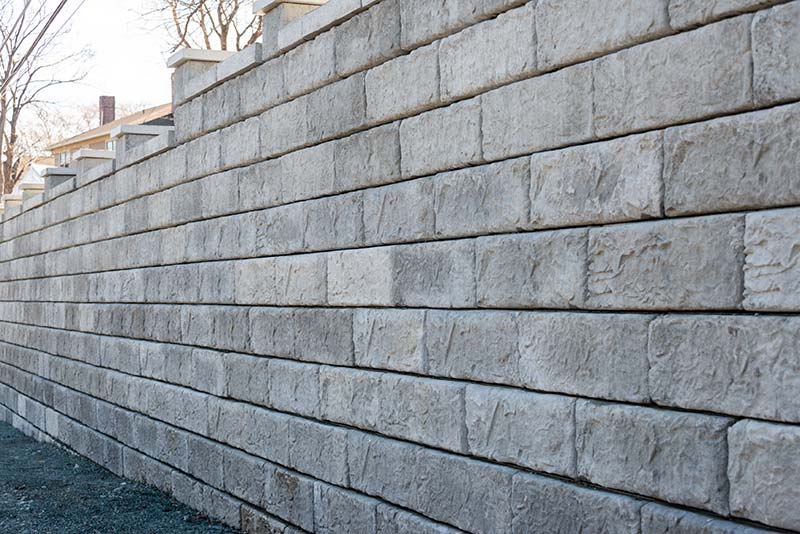
Built from interlocking blocks, these systems balance strength and style. They fit well for both homes and businesses. They’re flexible for curves and tiers and easy to maintain.
Natural Stone
Offers a timeless, organic look. Ideal for rustic landscapes. It’s durable but takes skilled craftsmanship to stack correctly.
Timber
Affordable and quick to install. Works well for smaller landscaping projects but needs treatment to prevent decay.
Our crews help you compare cost, durability, and aesthetics to find the perfect match.
Building the Wall Step-by-Step
Step 1: Site Preparation
We clear vegetation, mark the layout, and dig a trench that’s deep enough for the base layer. The trench must be level from end to end.
A solid base is everything. We use compacted crushed stone or gravel to form a foundation that supports the weight above.
Step 2: Laying the Foundation
For a concrete block retaining wall, the first row of blocks is the most important. It sets the alignment for the rest of the wall. Each block is checked with a level before continuing.
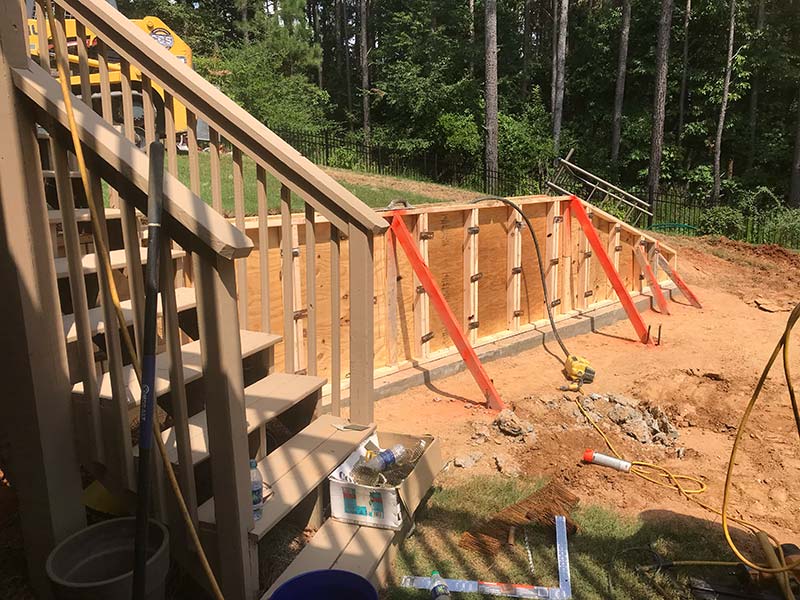
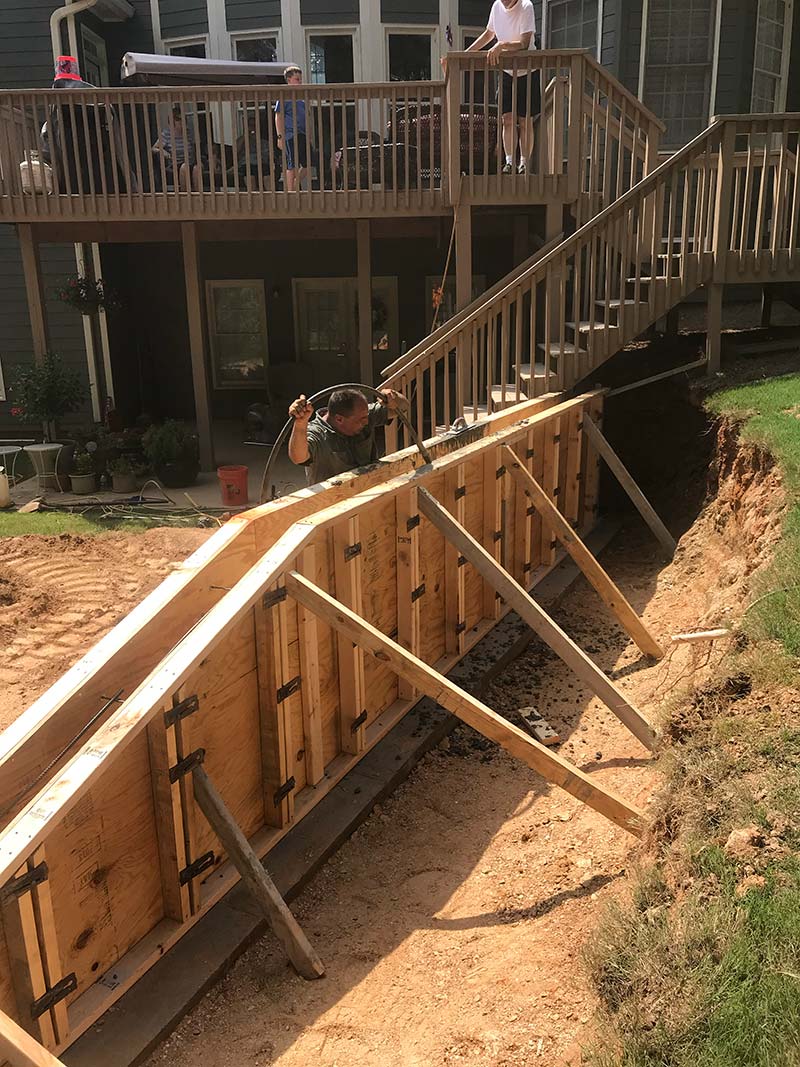
For poured concrete retaining walls, we build strong forms, set rebar, and pour in layers. The concrete is allowed to cure fully before removing forms.
Step 3: Building Up
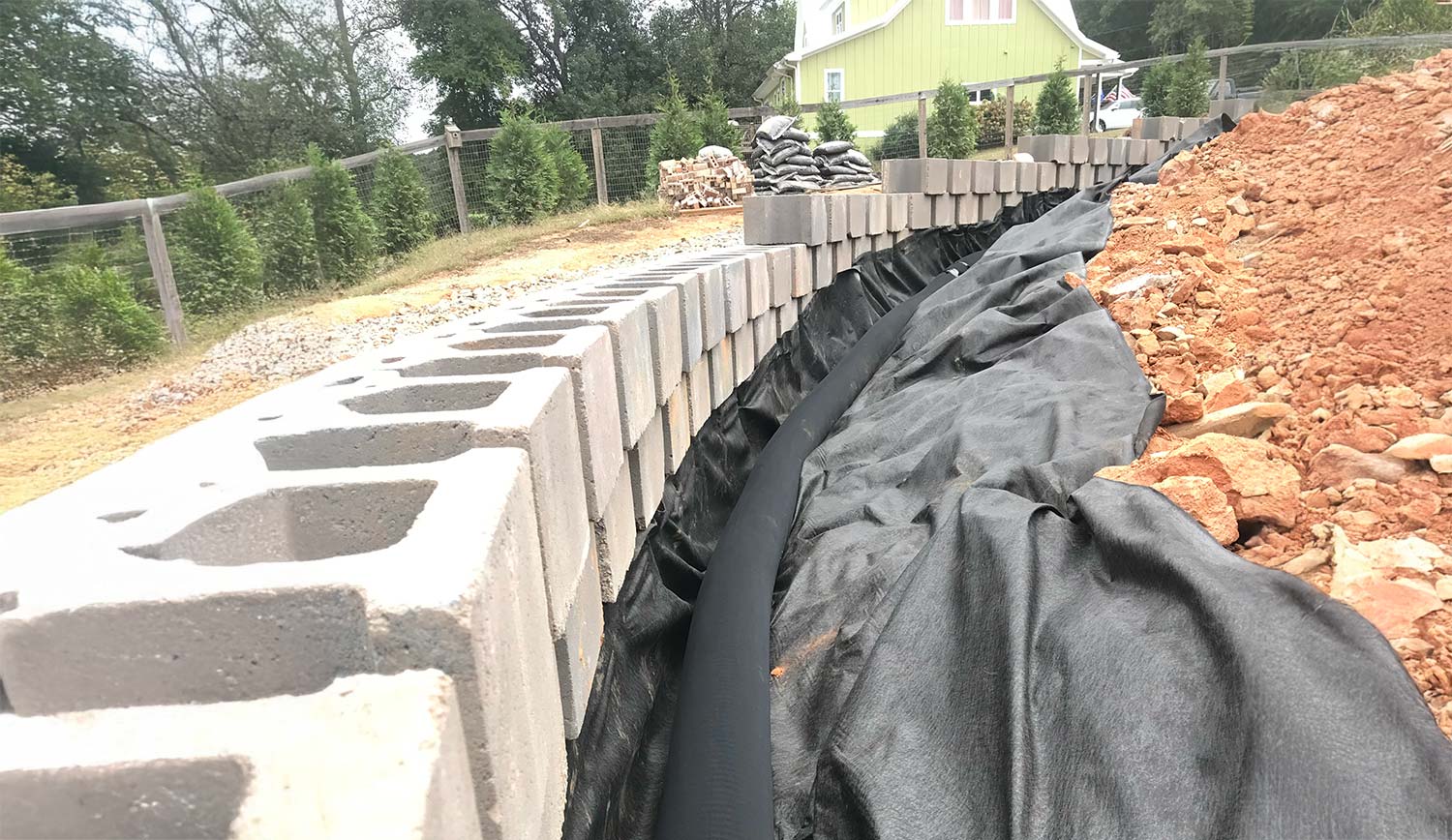
Once the base is solid, we build upward layer by layer. Blocks are staggered for strength, and the space behind the wall is filled with gravel as we go.
Walls over four feet often need geogrid reinforcement — a mesh-like material that ties the wall back into the soil for added stability.
Step 4: Drainage Installation
Drainage is what separates a wall that lasts 50 years from one that fails in 5. Without proper drainage, water builds pressure behind the wall and causes cracking or leaning.
We install a perforated drainpipe (French drain) at the base of the wall and surround it with gravel to let water escape. Weep holes are added for concrete walls to release pressure.
In areas with high rainfall, we may add surface drains or sloped grading above the wall to direct runoff away.
Step 5: Backfill and Finish
After the drainage system is installed, we backfill in small layers, compacting the soil each time to prevent settling.
Finally, the wall is topped with caps or stones for a clean finish. Landscaping, lighting, and plantings can then be added to complete the look.
The Importance of Drainage Systems
Many homeowners don’t realize how critical proper drainage is for any retaining wall. Even the strongest concrete block retaining wall can collapse under water pressure if it can’t drain.
There are several drainage options:
- French Drain: A perforated pipe buried behind the wall that carries water away.
- Weep Holes: Small openings in a concrete retaining wall that let water escape naturally.
- Filter Fabric: Keeps soil from clogging the drainage gravel.
- Gravel Backfill: A 12–18 inch layer of coarse gravel allows water to flow freely to the drain.
At CCS Construction, we always integrate a drainage plan into every design. It’s not optional — it’s what ensures the wall’s longevity.
Retaining Wall Materials: Pros and Cons
Concrete Retaining Wall
Pros: Extremely durable, customizable finish, resists erosion
Cons: Higher cost, requires formwork and curing time
Concrete Block Retaining Wall
Pros: Easy to install, clean look, flexible for curves
Cons: Can shift without proper base or drainage
Timber
Pros: Affordable, rustic appeal
Cons: Shorter lifespan, needs maintenance
Gabion Basket (rock-filled cages)
Pros: Environmentally friendly, drains well
Cons: Industrial appearance
Our experts help you weigh the choices based on function, appearance, and budget.
Retaining Wall Ideas for Every Property
Every property has a unique slope, layout, and style. Here are a few retaining wall ideas to inspire your design:
1. Tiered Garden Walls
Terraced walls create several flat planting spaces. They’re great for flowers, vegetables, or shrubs.
2. Curved Walls
A curved concrete block retaining wall follows the land’s natural shape. It softens the look and adds elegance to gardens or driveways.
3. Integrated Seating
Combine your retaining wall with built-in seating. It saves space and gives your yard a cozy gathering area.
4. Decorative Finishes
Stamped or colored concrete adds character. Stone veneers can match your home’s exterior for a cohesive look.
5. Lighting
Low-voltage LED lighting installed along the top or face of your wall highlights features and increases safety at night.

The Cost of Building a Retaining Wall
Budgeting is an important part of planning. The total cost depends on the wall’s size, material, and location.
Here’s a general breakdown (average costs in Georgia):
- Concrete Block Retaining Wall: $25–$50 per square foot
- Concrete Retaining Wall: $35–$60 per square foot
- Natural Stone Wall: $40–$75 per square foot
- Timber Wall: $20–$35 per square foot
Labor, permits, and excavation can also affect price. The more complex the site, the more time and resources it requires.
At CCS Construction, we provide clear, itemized quotes so you know exactly what you’re paying for — no surprises, no hidden fees.
Maintenance and Longevity
Once your wall is complete, maintenance is minimal but important. Here’s how to keep it in great shape:
- Inspect yearly for cracks or settling.
- Clean off moss or dirt buildup.
- Make sure the drains stay unclogged.
- Keep plants with deep roots away from the base.
- Add new topsoil or mulch as needed for landscaping.
A well-maintained retaining wall can last for decades, protecting your land and adding value to your property.
Integrating Landscaping and Design
A retaining wall should work with your landscape, not against it. Proper integration can turn a plain slope into a stunning outdoor feature.
We often design walls that frame patios, fire pits, and garden areas. Soft plantings like ornamental grasses and trailing flowers can soften the wall’s appearance and make it feel natural.
In larger spaces, combining multiple retaining wall ideas — like terraces and steps — adds texture and flow. Decorative rock, lighting, and hardscapes can further elevate the design.
Whether you’re aiming for clean modern lines or a rustic garden vibe, CCS Construction can make your vision real.
When to Repair or Replace
Even the best walls eventually show wear. Common signs it’s time to call a retaining wall contractor include:
- Bulging or leaning sections
- Deep cracks or separations
- Soil erosion behind or beneath the wall
- Drainage failure or pooling water
Sometimes a partial rebuild or drainage fix can save the wall. Other times, full replacement is safer. Our team inspects and explains every option before starting work.
Why Choose CCS Construction
At CCS Construction, we build more than walls — we build trust. Every project starts with a conversation about your land, budget, and goals. Then we design a solution that fits.
We combine skilled craftsmanship with local expertise. We know Georgia’s soil, weather, and regulations. That knowledge ensures your wall meets code, drains properly, and lasts for decades.
Our process includes:
- Detailed site evaluation
- Clear, upfront pricing
- Quality materials and drainage systems
- Professional installation
- Clean, timely completion
From start to finish, we treat your property as if it were our own.
When you work with CCS Construction, you’re getting a partner who cares about doing it right.
Final Thoughts
A retaining wall is more than just a practical fix — it’s an investment in your property’s strength and style. From simple concrete block retaining walls to complex concrete retaining wall systems, each one we build is made to perform and last.
If you’re planning a new wall or need repairs on an existing one, trust the experienced team at CCS Construction. We’ll guide you through every step — from design and permits to installation and cleanup.
Let us help you transform your landscape into something strong, beautiful, and built for the long run.
Conclusion
Building and maintaining an asphalt driveway is one of the smartest investments you can make for your property. When done right, it delivers strength, beauty, and longevity that concrete can’t match. With routine care and help from a trusted asphalt company, your driveway can stay looking brand-new for decades.
At CCS Construction, our goal is simple — deliver top-tier results that make every project last. If you’re ready to build a driveway that’s as tough as it is beautiful, we’re ready to get to work.
FAQ
How long does it take to build a retaining wall?
Most residential projects take 3–7 days, depending on the wall’s size and site conditions.
What’s the best height for a backyard retaining wall?
It depends on your slope and soil type, but most residential walls range from 2 to 6 feet tall.
Can a retaining wall be used as a fence base?
Yes, but it must be engineered to handle the added load of fencing.
How do I keep weeds from growing between concrete blocks?
Install landscape fabric beneath and behind the wall to stop weed growth.
Does a concrete wall need rebar reinforcement?
Yes. Rebar strengthens the structure and helps resist cracking.
What happens if water builds up behind my wall?
Hydrostatic pressure can cause leaning or cracking — proper drainage prevents this.
Can CCS Construction build retaining walls for commercial properties?
Absolutely. We design and install walls for commercial, residential, and industrial clients.
How long will a concrete block retaining wall last?
With correct drainage and maintenance, it can last 50–100 years.
Do you offer custom designs or finishes?
Yes, from stamped concrete to stone veneers and integrated lighting.
Can you build retaining walls on steep hillsides?
Yes. We specialize in challenging grades and provide full grading and drainage services.